
Topeka Directory Shelves and Catalogs
Topeka city directory collections are split among a local shelf, a state holding database, a genealogical society, and online images. The Topeka & Shawnee County Public Library describes hardbound volumes from 1870 forward. The Kansas Historical Society catalog reaches into the 1860s and identifies each title, publisher, format, and call number. Topeka Genealogical Society adds directory indexes and local research help.
| Collection | Verified years or examples | Where held | Access |
|---|---|---|---|
| Hardbound Topeka city directories | 1870-present collection description | TSCPL Topeka Room | Physical shelf with staff and scan equipment |
| Early publisher runs | 1868; 1870-78; many 1880s titles | Kansas Historical Society | Holding records, call numbers, some format links |
| Polk and telephone books | 1950s and later examples | KSHS and local collections | Title-by-title catalog or physical use |
| Cross-reference volumes | 1952-53, 1954, 1955-56 and 1961-62 examples | KSHS/TSCPL holdings | Check the exact volume at the repository |
| Community-specific directories | 1900-01, 1922, 1923, 1928, 1934 | KSHS and Kansas Memory | Catalog pages and linked digital items |
| TGS local series | 1880s-present description; Radges deaths 1883-93 | Topeka Genealogical Society | Free summary search and applicable detail route |
“Present” is the library’s collection description, not proof that every year is held. No official source inspected named the final printed year or a complete reverse-book run. Search the exact year and title before planning a visit.
Early Topeka City Directory Years
The KSHS Shawnee County directory search displayed 479 results when inspected. Early records include an 1868 Millison & Heil directory, 1870 and 1872-73 Samuel Radges titles, an 1871 Southwestern Publishing volume, 1874-75 F.H. Woodbury, and later Radges runs. The catalog is a holdings index. A result may lead to a call number or format link without offering a name-searchable scan.
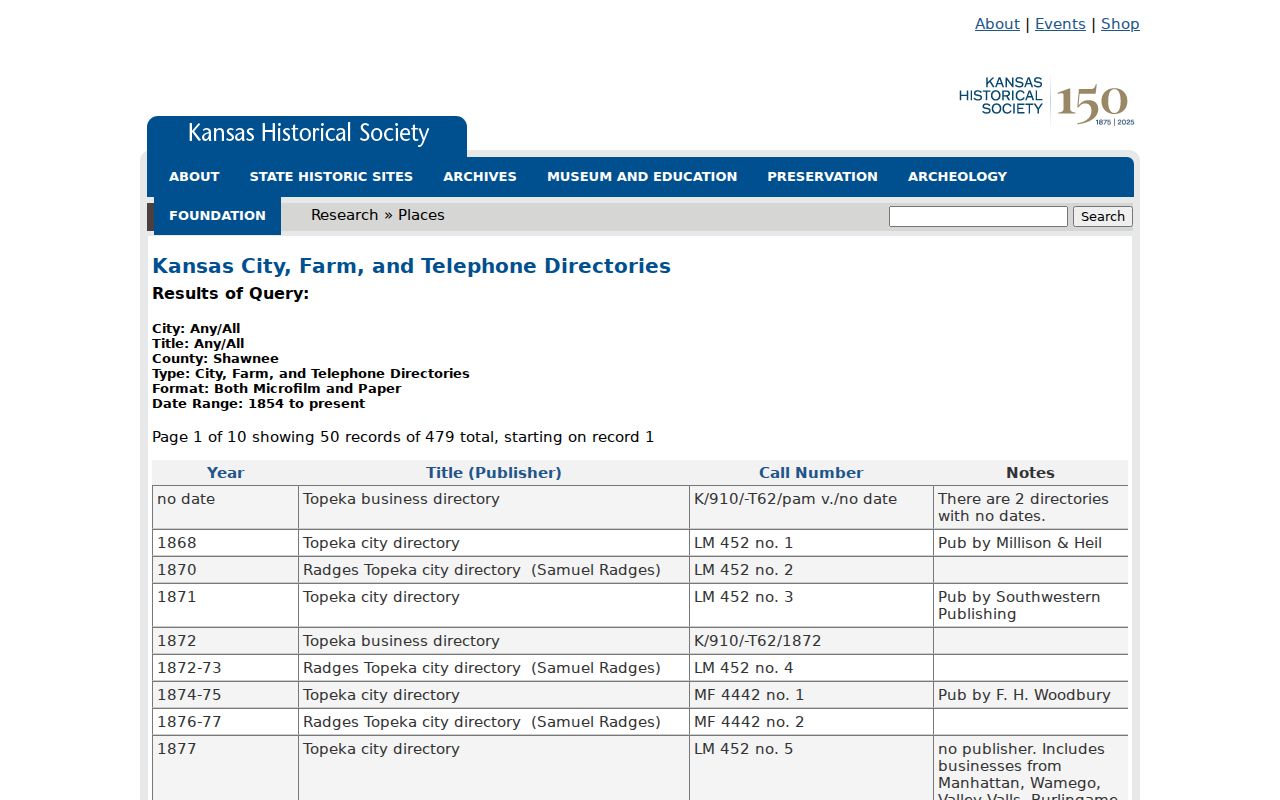
The screen captures the title-by-title approach. Note the repository and call number whenever a Topeka volume is not searchable by personal name.
Topeka Directories Change Form
The sequence shows a shift from compact early books to a denser mix of city, business, telephone, and reverse formats. It also shows why one search method cannot cover all eras.
| 1868 | An early Topeka directory appears in KSHS holdings. |
|---|---|
| 1870-89 | Radges, Southwestern Publishing, Woodbury, business, and multi-county titles appear. |
| 1898 | A telephone directory adds a different kind of listing. |
| 1900-01 | Topeka and Shawnee County titles include a community-specific business directory. |
| 1950s | Polk, Southwestern Bell, Greater Topeka, and cross-reference books overlap. |
| 1961-62 | A verified cross-reference title sits beside Polk and telephone runs. |
No last printed year was verified. The safe statement is that the library describes its bound shelf from 1870 forward, while KSHS records each title separately.
Use Topeka Room Collections
The Topeka Room and Baker Genealogy Center sit on the library’s second floor. Their value is the ability to place a city directory beside a map, newspaper, obituary, yearbook, census, or house file. The Resource Room has vertical files on more than 2,000 subjects and about 6,000 people or families. Public computers, photocopiers, and ScanPro readers support work with print and microfilm.
A professional librarian is available during open hours, and TSCPL local-history visit information explains the collection and appointment route. Search the HOUSES file with an address or block before opening several directory years. It may point to a former street name, a clipping, a blueprint, or a local-history file.
The physical shelf and the KSHS catalog answer different questions. TSCPL helps with browsing and context; KSHS helps identify titles and formats across years. Treat them as complements, not duplicate copies.
Decode a Topeka Directory Entry
A directory entry must be read with its own key. Publishers changed abbreviations and the facts they collected. Record the exact line, page, title, and year before expanding any mark. The public KSHS sample from 1871 is a business or lodging entry, not a private home record.
| Name | The listed person, firm, or place, often printed with initials. |
|---|---|
| Role | An occupation, business role, spouse or widow notation, if that publisher supplied it. |
| Address | A house or business number, street, or a cross-street interval. |
| Status mark | An owner, boarder, roomer, or residence mark only when the volume’s key defines it. |
| Nearby entry | A useful check on block order and changed street names. |
The KSHS 1871 Topeka example reads “Capitol House, John Wilson proprietor, Sixth st., bet[ween] Kansas ave. and Jackson St.”
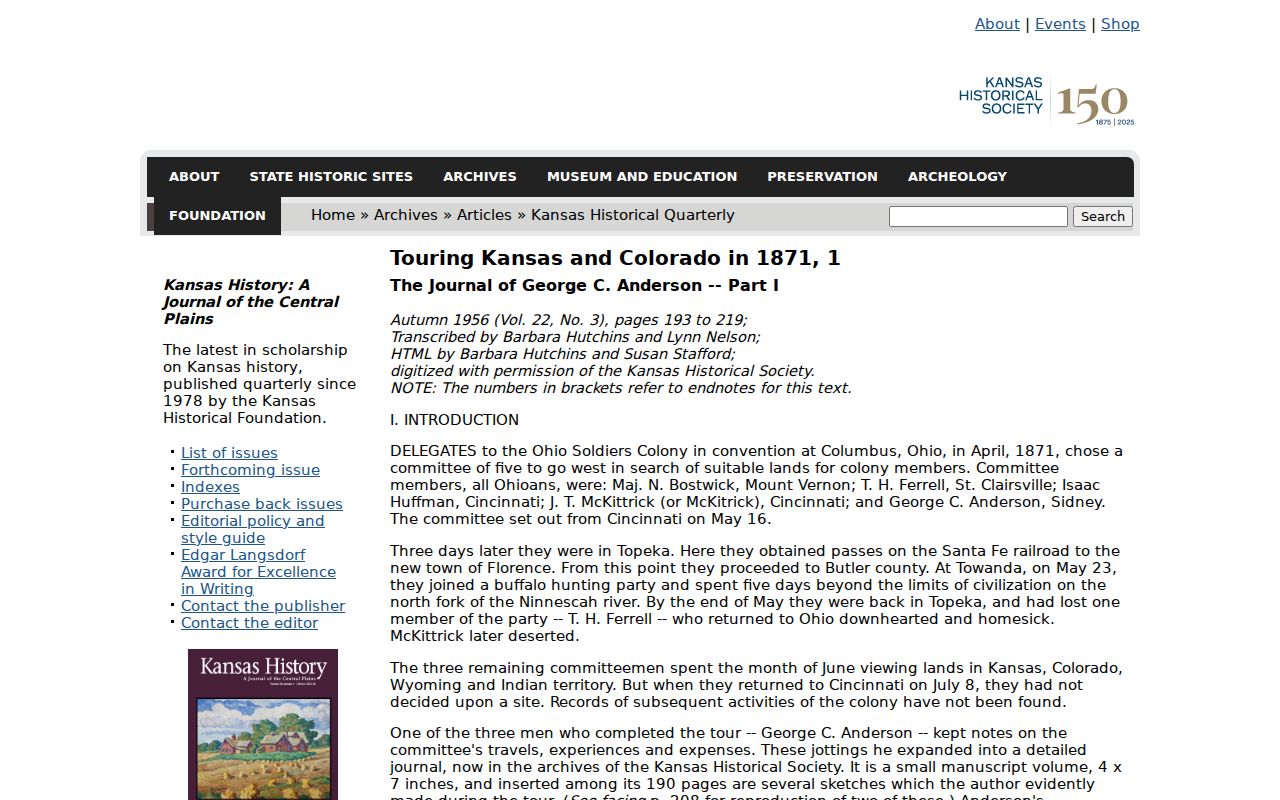
It demonstrates name, role, street, and cross-street order, but it does not establish John Wilson’s private residence.
- Criss-cross directory
- A later street-order section that turns an address into the printed name at that number.
- Householder index
- An address-oriented list of household heads or listed parties, as defined by that publisher.
- Abbreviation key
- The volume’s own legend for occupations, status marks, street forms, and symbols.
Black Topeka Directory Holdings
General city directories were not always complete or even in their coverage. KSHS identifies distinct directories relating to the African American community: a Topeka business directory for 1900-01, Oakland in 1922, North Topeka in 1923, and Topeka Colored Directory titles from 1928 and 1934. Search these runs on their own instead of assuming a general volume captured the same names and firms.
The KSHS community-directory collection links the holding records and Kansas Memory items.
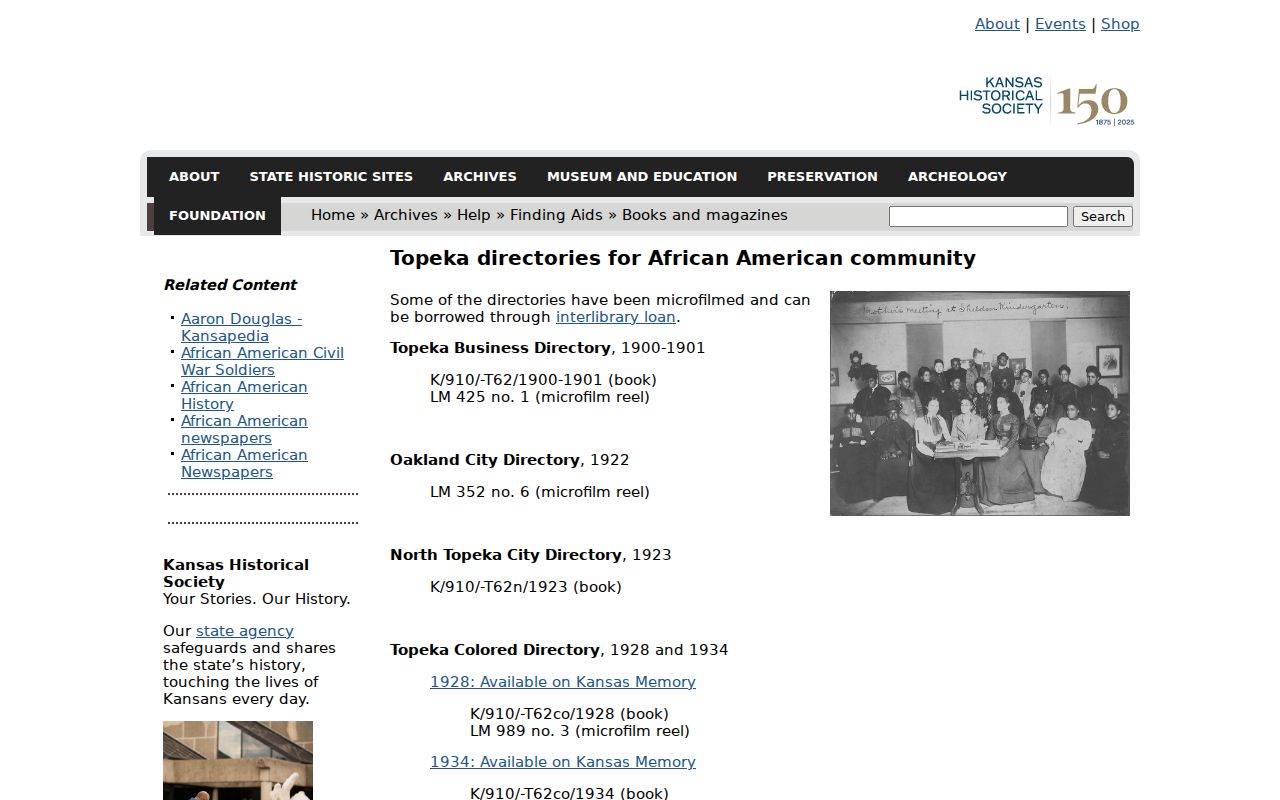
Oakland, North Topeka, and Tennessee Town can also work as geographic search terms. The TGS index singles out Tennessee Town in the 1898 state census, adding a second dated source.
Reverse Topeka Directory Books
Later cross-reference volumes change the entry point. A standard alphabetical book starts with a surname. A criss-cross book starts with street and number, which is useful for a known place or a household that changed surnames. KSHS results verify Topeka cross-reference titles for 1952-53, 1954, 1955-56, and 1961-62, alongside Polk and telephone books.
Telephone volumes are not the same as household censuses. Unlisted numbers, shared service, business lines, and publisher scope can all shape an entry. Save the exact title, because “Polk,” “Southwestern Bell,” “Hill-Donnelly,” “City Publishing,” and “Greater Topeka” describe different products. For present-day parcel and deed fields, switch to the modern Topeka street records rather than forcing an old book to answer a current question.
Trace Family in Topeka Directories
Family history gains strength from repetition across dates. One city directory can place a printed name at one address. A run of volumes can suggest an arrival, move, name change, or disappearance. Census, obituary, cemetery, probate, church, permit, and deed evidence explain what the directory alone cannot.
- Start with a surname, address, or rough year. Check the HOUSES file if the street is the strongest fact.
- Open the nearest available Topeka city directory. Copy the spelling, initials, address, role, marks, neighbors, title, page, and year.
- Repeat in the next available volume. Do not assume a gap means the person left Topeka.
- Compare federal census years such as 1870, 1880, 1900, 1910, 1920, 1930, and the public 1950 census, plus Kansas state census intervals described by TGS.
- Use an obituary, burial record, probate file, church register, deed, or permit to explain a move, death, relationship, or property tie.
A name can disappear because of a move, death, omission, changed spelling, married name, old street label, or a change in publisher coverage. Test each cause with a second dated record.
Pair Topeka Directories With Obituaries
TSCPL describes an obituary index with more than 170,000 Topeka newspaper entries from 1906 to the present. Its request service permits up to ten names and asks for the name and full death date plus requester contact details. The service is free to Kansas residents. When the index misses an item, staff can check microfilm, described as the most complete local newspaper run.
The Topeka obituary request route is shown below.
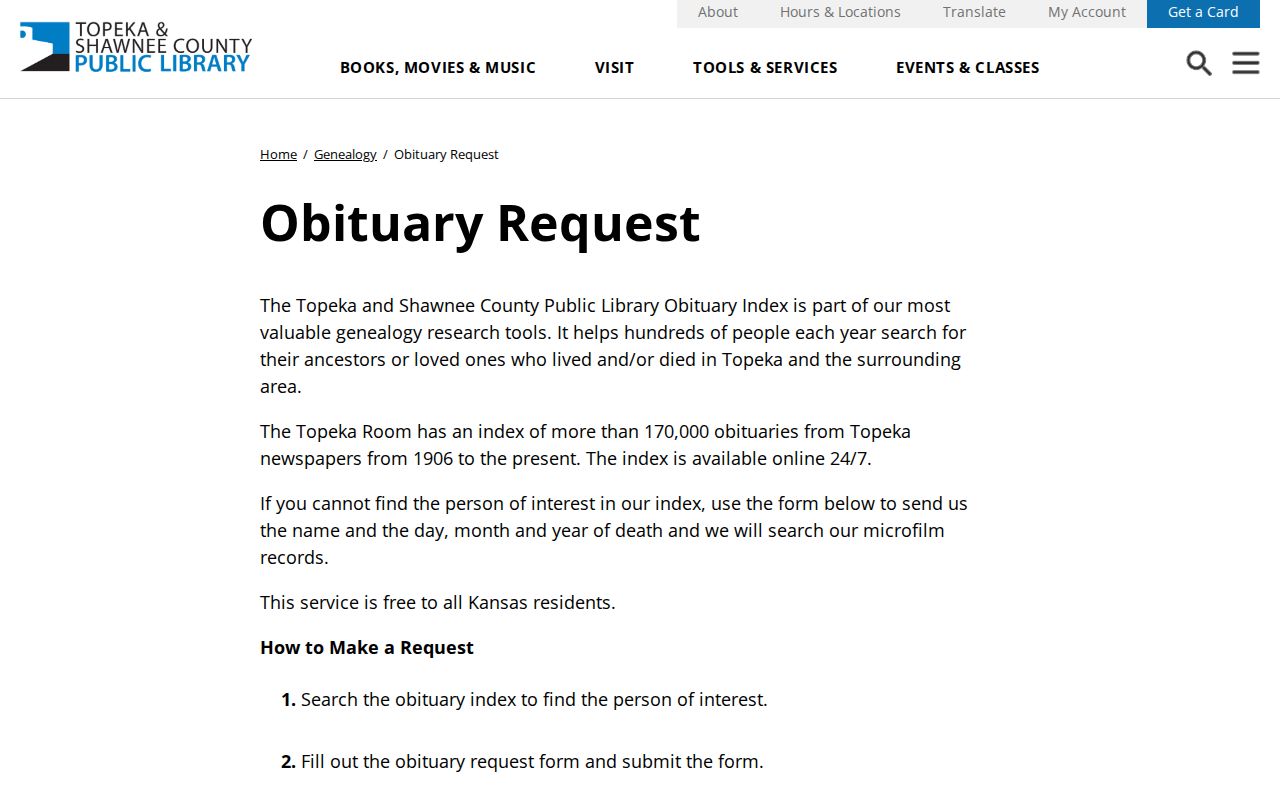
An obituary may supply relatives, a last address, burial place, and service details that explain why a printed name ends between directory years.
Topeka’s 1913 Auto Directory
The 1913 Shawnee County atlas is an unusual partner for city directory research. Township maps name landowners, while pages 41 through 44 list automobile owners with the vehicle make or year and the owner’s name and address. That joins map, person, date, and mobility in one source.
Use the atlas as a dated lead. Compare its owner with a 1912-14 directory, then test a deed or newspaper. An atlas label and automobile listing do not prove that a person remained at the address. The source is especially useful when a surname is common and an added street or vehicle fact separates two candidates.
When Topeka Entries Disappear
Topeka street-name changes made in 1937 can break an otherwise sound search. Preserve the old name and quadrant, then compare cross streets, nearby entries, a Sanborn map, legal description, or subdivision. Do not silently rewrite the old entry with a modern label.
Publication lag also matters. A directory may reflect facts gathered months before its cover year. No listing proves full-year presence, ownership, or every person in a household. Initials, married names, widow marks, and publisher abbreviations must be tested against the book’s key and another source.
Best practice. Cite the Topeka directory title, year, page, printed entry, repository, and access date before drawing a family-history conclusion.